Gili Islands Dive Sites — Trawangan, Air, Meno Turtle Sites with Lombok Scuba Diving
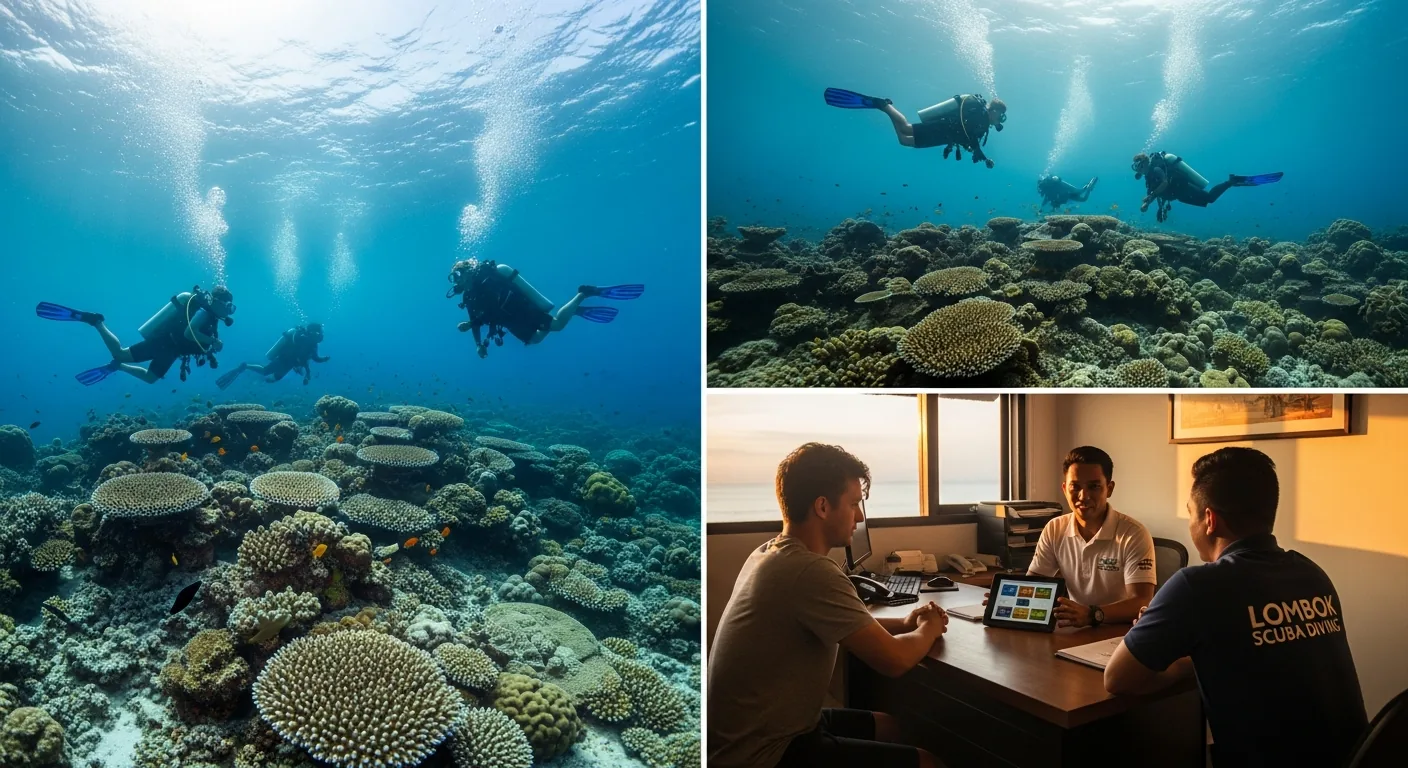
The descent begins. The surface world, with its fringe of coconut palms and white sand, dissolves into a silent, cerulean expanse. The only sound is the rhythmic pull and release of your own breath. Sunlight filters through the water column, dancing across the backs of a school of fusiliers. At 15 meters, the reef materializes—a complex architecture of hard corals and swaying sea fans. Then, a shadow detaches from the seascape. A mature green sea turtle, ancient and unhurried, glides past, its gaze indifferent. This is the tangible reality of Gili Islands scuba diving.
The Gili Islands Marine Sanctuary: A Diver’s Compendium
Positioned in the Lombok Strait, the three Gili Islands—Trawangan, Meno, and Air—occupy a critical position along the Wallace Line, the biogeographical boundary separating the ecozones of Asia and Australasia. This placement results in a confluence of marine species, creating a biodiverse environment for divers. The waters surrounding the islands, officially a marine protected area (Taman Wisata Perairan Gili Matra), are characterized by consistent tropical temperatures, averaging 27-29°C year-round, and visibility that frequently extends from 15 to over 30 meters. Our PADI dive center, with operational bases in both Senggigi, Lombok, and on the islands, is strategically located to provide access to more than 25 distinct dive sites scattered around this small archipelago. These sites offer a varied topography, from gentle sloping reefs and dramatic walls to deep-water seamounts and purpose-sunk wrecks, making the region suitable for divers of all certification levels, from novice to technical. The conservation efforts, supported by organizations like the Gili Eco Trust, are palpable in the health of the coral and the density of the resident turtle population, primarily consisting of Green (Chelonia mydas) and Hawksbill (Eretmochelys imbricata) turtles. See also: air vs meno.
Premier Gili Trawangan Dive Sites: Currents, Wrecks, and Pelagics
Gili Trawangan, the largest of the three islands, is known for its more dynamic dive sites, which often feature moderate to strong currents, attracting larger marine life. This is the heart of Gili Trawangan diving, offering a rewarding experience for those with an advanced certification or a keen sense of adventure. As a dedicated Lombok dive center, we meticulously plan our Trawangan excursions based on tidal patterns to ensure optimal conditions for each site. See also: explore Contact.
Shark Point: Located on the northern tip of Trawangan, this site is a multi-level dive that begins on a shallow, sandy slope before descending to a series of canyons and ridges at depths of 24 to 30 meters. The currents that sweep through this point attract blacktip and whitetip reef sharks, large schools of jacks and snappers, and occasionally eagle rays. The topography itself is compelling, with large barrel sponges and established gorgonian fans providing shelter for smaller reef fish.
Halik Reef: A contrast to the deep canyons of Shark Point, Halik is a vibrant, sloping reef on the island’s west coast, ideal for both certified divers and PADI course training dives. The coral garden, particularly rich in Acropora table corals, thrives in the shallows (5-15 meters) and is a primary feeding ground for the island’s abundant turtle population. It is not uncommon to encounter five to ten turtles on a single dive here, grazing on sponges or resting on the reef. The gentle current makes it a relaxing drift dive.
Bounty Wreck: This site features a 30-meter-long sunken concrete platform, scuttled in 2003 to create an artificial reef. Resting on a sandy bottom at a maximum depth of 18 meters, the Bounty Wreck is now fully colonized by marine life. Schools of sweetlips and drummer fish congregate around the structure, while scorpionfish and lionfish camouflage themselves against its surfaces. This accessible wreck is an excellent location for PADI Wreck Diver specialty training and underwater photography.
Gili Meno’s Subaquatic Sanctuaries: Turtles and Statues
Gili Meno offers a more tranquil diving experience. The sites here are characterized by calmer conditions and a focus on iconic marine life and unique underwater installations. For divers seeking close encounters with turtles or a truly distinct photographic subject, Meno is the principal destination. The slower pace of life above water is mirrored below, making it an excellent location for relaxed, multi-level dives. See also: Best Time Lombok Diving guide.
Meno Wall / Turtle Heaven: As the name suggests, this is the epicenter of turtle activity in the Gilis. Located off the west coast of Meno, the “wall” is more of a steep, two-tiered slope that drops from 5 meters to 22 meters. The wall is punctuated with coral bommies and overhangs where dozens of Green and Hawksbill turtles can be observed. The sheer concentration of these animals is what defines the site. Divers can also find moray eels, ribbon eels, and a variety of crustaceans hiding within the reef’s crevices.
BASK Nest Statues: Perhaps the most photographed underwater site in Indonesia, “Nest” is an art installation by renowned sculptor Jason deCaires Taylor, installed in 2017. The 48 life-size human figures arranged in a circle on the seabed at just 4 meters deep were created to foster a new coral colony. The pH-neutral concrete encourages coral polyps to attach and grow, slowly transforming the sculpture into a living reef. It is an accessible site for snorkelers and divers alike, offering a profound intersection of art and marine biology.
Simon’s Reef: A deeper site for advanced divers, Simon’s Reef is a collection of large seamounts rising from a sandy bottom at 35 meters. The topography is exceptional, with massive coral heads, barrel sponges, and large gorgonian sea fans. The depth and occasional currents attract more pelagic species, and the coral formations are some of the most pristine in the Gili archipelago. This is a challenging but highly rewarding dive that showcases the deeper ecosystem of the Lombok Strait.
Exploring Gili Air: Macro Life and Muck Diving
The diving around Gili Air presents another facet of the region’s biodiversity, with a particular emphasis on macro life and “muck diving.” While turtles and reef fish are common, the sites here are celebrated by photographers and keen-eyed divers for the smaller, more unusual critters that inhabit the sandy slopes and soft coral gardens. A day of Gili scuba diving around Air is a lesson in careful observation. See also: Home pricing.
Air Wall: Situated on the eastern side of the island, Air Wall is a vertical drop-off from 8 to 28 meters. The wall is covered in colorful soft corals, sponges, and anemones. This is a prime location for macro enthusiasts searching for nudibranchs, pygmy seahorses clinging to gorgonian fans, and cleaner shrimp. The visibility is often excellent, and the wall provides a dramatic backdrop for wide-angle photography as well.
Hans Reef: This site is a critter-hunter’s delight. A gently sloping reef with patches of sand and coral bommies, Hans Reef is a habitat for some of the area’s most sought-after macro subjects. Experienced guides from our Lombok dive center can often locate ornate ghost pipefish, frogfish (including the giant and warty varieties), and a variety of scorpionfish. It requires a patient approach, but the rewards are significant for those interested in the smaller wonders of the reef.
Gili Air Wreck: For advanced divers, the wreck of a 20-meter Japanese patrol boat, sunk during World War II, lies at a depth of 30 meters off the southern coast. Unlike the Bounty Wreck, this is a true historical artifact. It sits upright on the sand and is now heavily encrusted with corals and home to glassfish, batfish, and resident moray eels. Due to its depth, bottom time is limited, requiring careful dive planning.
Gili Islands Dive Site Comparison
| Dive Site | Island | Max Depth | Current | Key Sightings | Best For |
|---|---|---|---|---|---|
| Shark Point | Gili Trawangan | 30m | Moderate to Strong | Reef Sharks, Eagle Rays, Turtles | Advanced Divers, Drift Diving |
| Meno Wall | Gili Meno | 22m | Mild | Green & Hawksbill Turtles, Moray Eels | All Levels, Turtle Encounters |
| Hans Reef | Gili Air | 24m | Mild to None | Frogfish, Ghost Pipefish, Nudibranchs | Macro Photography, Muck Diving |
| Bounty Wreck | Gili Trawangan | 18m | Mild | Scorpionfish, Schooling Snapper | Open Water Divers, Wreck Intro |
| BASK Nest Statues | Gili Meno | 5m | None | Underwater Sculptures, Reef Fish | Beginners, Snorkelers, Photography |
Your PADI Certification with Lombok Scuba Diving
For those looking to begin their underwater exploration or advance their skills, our PADI 5 Star Dive Center provides a full spectrum of certification courses. The calm, clear waters of the Gili Islands offer an ideal training environment. All Lombok PADI courses are conducted by experienced, multilingual instructors in small groups to ensure personalized attention and adherence to the highest safety standards.
- PADI Open Water Diver: The world’s most popular scuba course. This 3-4 day program combines theory, confined water skills, and four open water dives to certify you to dive to 18 meters. Courses start from USD 380.
- PADI Advanced Open Water Diver: Expand your skills with five adventure dives over 2 days. This course includes a deep dive and an underwater navigation dive, plus three electives of your choice, such as wreck, drift, or fish identification. Courses start from USD 350.
- Specialty Courses: We offer a range of PADI specialties including Enriched Air (Nitrox), Deep Diver, Wreck Diver, and Digital Underwater Photographer to refine your expertise in specific areas of interest.
- PADI Divemaster: The first professional-level certification. This comprehensive internship program is for those looking to make a career in the diving industry.
A Day of Diving in the Gilis: Sample Itinerary & Inclusions
A typical day of Gili scuba diving with us is structured for comfort, safety, and maximum enjoyment. We handle all logistics, allowing you to focus on the experience. Whether departing from our Senggigi, Lombok base or directly from the Gilis, the day is seamless.
Our Guided Dive Trips Include:
- Professional, PADI-certified Divemaster or Instructor as your guide.
- Two dives at selected sites around the Gili Islands.
- Full set of well-maintained Scubapro or Aqualung rental equipment.
- Return boat transfers on our dedicated dive vessels.
- Drinking water, coffee, tea, and fresh fruit on board.
- All marine park fees and local taxes (including the IDR 50,000 Gili Eco Trust contribution).
Sample Daily Itinerary:
8:30 AM: Meet at the Lombok Scuba Diving center for equipment fitting and briefing.
9:00 AM: Boat departure for the Gili Islands (approx. 35-minute journey).
10:00 AM: Dive 1 at a pre-selected site (e.g., Shark Point).
11:15 AM: Surface interval on the boat with refreshments.
12:30 PM: Dive 2 at a different site (e.g., Halik Reef).
2:00 PM: Return journey to the dive center.
2:30 PM: Log dives and debrief with your guide.
Pricing: Guided fun dives for certified divers start from USD 35 per dive, with packages available for multiple days of diving.
Frequently Asked Questions about Gili Islands Diving
What is the best time of year to dive in the Gili Islands?
While diving is excellent year-round, the dry season from April to October generally offers the calmest seas and best visibility, often exceeding 30 meters. The rainy season (November to March) can bring some surface chop and reduced visibility, but diving conditions remain very good, with water temperatures consistently at a warm 27-29°C.
Are the Gili Islands suitable for beginner divers?
Absolutely. The Gilis are one of Southeast Asia’s most popular locations to learn to dive. Many sites, particularly around Gili Meno and Gili Air, are protected from strong currents and have shallow reefs perfect for training dives and for newly certified divers to build confidence.
Do I need to be certified to try scuba diving?
No. We offer the PADI Discover Scuba Diving program. This is a one-day experience where a PADI Instructor will teach you basic skills in a pool or confined water before guiding you on an actual reef dive to a maximum depth of 12 meters. It’s a safe and supervised introduction to the underwater world.
What specific marine life can I expect to see?
The Gili Islands are most famous for their high density of Green and Hawksbill turtles. You will also regularly encounter whitetip and blacktip reef sharks, moray eels, cuttlefish, octopus, lionfish, and vast schools of reef fish. On certain sites, macro life like frogfish and ghost pipefish are a highlight. While manta rays are not common directly around the Gilis, they are sometimes seen at dive sites in South Lombok.
How do I get to the Gili Islands from your Lombok dive center in Senggigi?
We provide seamless transfers. Our dive boats can depart directly from the Senggigi area or from the nearby Teluk Nare harbor, which is a short car ride from our center. The boat journey to the Gili Trawangan dive sites takes approximately 35 minutes, allowing us to access the full range of locations easily.
Why Choose Lombok Scuba Diving: Our Commitment to Safety and Excellence
Selecting a dive operator is a critical decision. At Lombok Scuba Diving, our reputation is built on an unwavering commitment to safety, professional conduct, and a superior client experience. We are not just a booking agent; we are a fully operational PADI 5 Star Dive Center with a vested interest in the quality of every dive we lead.
- PADI 5 Star Rating: This accreditation recognizes our excellence in diver training, safety standards, and environmental commitment.
- Experienced Instructors: Our international team of PADI Instructors and Divemasters has thousands of dives in these specific waters, ensuring expert guidance and site knowledge.
- Small Group Policy: We maintain a strict maximum ratio of four divers per guide. This ensures personalized attention, enhanced safety, and a more intimate diving experience.
- Equipment & Safety: We use regularly serviced equipment from leading brands like Scubapro and Aqualung. All our boats are equipped with emergency oxygen, first aid kits, and marine radios.